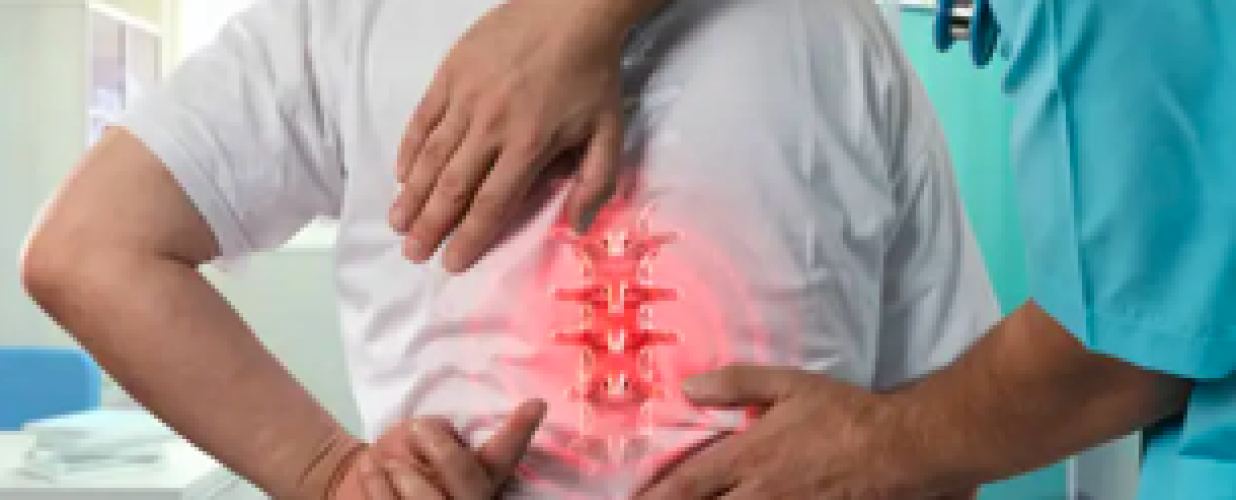

Herniated disc without surgery Tucker GA, if you’ve just received a disc herniation diagnosis, there’s a good chance surgery came up in the same conversation. And there’s an equally good chance nobody mentioned that, for most patients, surgery is not the first or only option.
At Complete Spine Solutions in Tucker, GA, our doctors see herniated disc patients regularly. Many of them came in after being told surgery was their best path forward. Some of them needed it. Most did not. Here’s what we think every patient should understand before making that decision.
What a Herniated Disc Actually Is
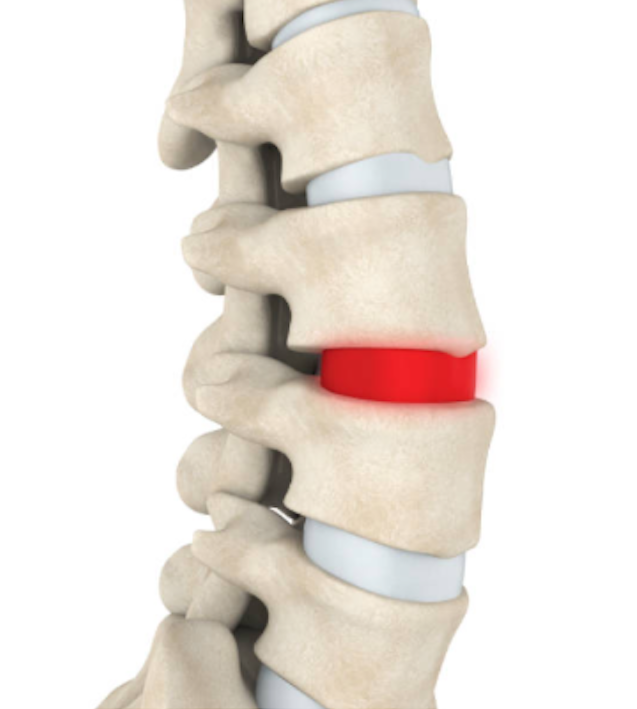
Between each pair of vertebrae in your spine sits an intervertebral disc, a tough, fibrous structure with a gel-like center. The disc acts as a shock absorber and spacer, allowing the vertebrae to move while keeping them from grinding against each other.
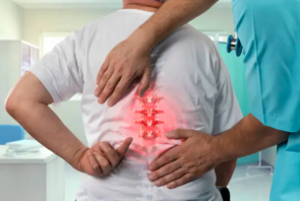
A herniation occurs when the disc’s outer layer (the annulus fibrosus) develops a tear or weakness, allowing the inner material (the nucleus pulposus) to push outward. Depending on where the disc herniates and how far the material pushes, it may put pressure on nearby nerve roots or the spinal cord itself.
That nerve compression is what produces the symptoms most patients associate with a herniated disc: sharp or radiating pain, numbness, tingling, and weakness in the areas served by the affected nerve. In the lumbar spine, this often means leg and foot symptoms. In the cervical spine, symptoms involve the arm and hand.
When Surgery Is Warranted and When It Usually Isn’t
Surgery for a herniated disc is clearly indicated in a small number of situations: when there is progressive neurological deficit (worsening weakness or loss of function), cauda equina syndrome (a rare but serious condition involving bladder or bowel dysfunction), or when conservative care has failed after a sustained, genuine trial.
For the majority of herniated disc patients, conservative care is the recommended first approach. The herniated disc material often reabsorbs over time as the body’s natural healing processes work on it. Symptoms frequently improve significantly without surgical intervention, provided the structural conditions that allowed the herniation to develop are also addressed.
What often doesn’t get communicated clearly in a brief clinical encounter is that ‘conservative care’ doesn’t just mean rest and pain medication. It means addressing the spinal alignment and loading patterns that contributed to the disc problem in the first place.
What Corrective Chiropractic Care Does for a Herniated Disc in Tucker, GA
At Complete Spine Solutions, herniated disc care begins with a thorough structural evaluation: a health history, neurological assessment, digital postural analysis, and X-ray imaging to understand the herniation’s structural context.
Corrective care using Chiropractic BioPhysics (CBP) protocols then addresses spinal alignment problems that contribute to abnormal disc loading. When the spine is misaligned, certain discs bear disproportionate compressive and shear forces. Restoring proper alignment changes how load is distributed across the disc, reduces the mechanical stress that prevents healing, and gives the disc the environment it needs to begin recovering.
This differs from a treatment approach that simply manages pain while waiting to see if the disc heals on its own. It addresses why the disc herniated and creates the structural conditions for better outcomes.
Herniated Disc at the Cervical Spine vs. the Lumbar Spine
The approach is similar in principle but different in application depending on which region of the spine is involved.
Cervical disc herniations (in the neck) frequently produce arm pain, shoulder pain, hand numbness, and headaches. Corrective care addresses the cervical curve and alignment. Lumbar disc herniations (in the lower back) most commonly produce sciatic-type symptoms down the leg. Corrective care addresses the lumbar curve and pelvis.
Because the cervical and lumbar curves are structurally interconnected, our doctors evaluate the whole spine, not just the region where symptoms are presenting.
What to Ask Before Agreeing to Surgery
- Have I completed a full trial of conservative care, including structural correction, not just rest and medication?
- Is there evidence of progressive neurological deficit that makes waiting riskier than operating?
- What does the research say about outcomes for my specific type and location of herniation with surgery versus conservative care?
- What is the expected recovery timeline with surgery, and how does that compare to conservative care?
- What happens if surgery doesn’t fully resolve my symptoms?
These are not hostile questions. They are the questions any informed patient should ask before agreeing to a procedure that carries its own risks and cannot always be undone.
Ready to Explore Herniated Disc Treatment Without Surgery in Tucker, GA?
Schedule a free consultation at Schedule a free consultation. Our doctors will do a thorough evaluation, explain what the structural picture looks like, and give you an honest assessment of what conservative care can realistically do for your specific herniation.
Call (770) 938-4606 or book online. We serve Tucker, Stone Mountain, Smoke Rise, Northlake, Clarkston, Decatur, and throughout DeKalb County, Georgia.